A smaller savings balance can send the same warning to a bank while concealing very different problems for the customer. For some consumers, everyday bills are absorbing more money. For others, the income that supported their budget has fallen.
The May 2026 Generational Pulse Report from PYMNTS Intelligence, “Inside the Cutback Economy: How Age, Behavior and Financial Pressure Shape Consumer Spending,” examines those pressures through a survey of 2,283 U.S. adults. Its findings suggest that a customer’s age can help explain financial strain, but providers also need to understand how that customer is responding. For a bank reviewing a household budget, the useful question is what caused the squeeze and which expense or income change could relieve it.
We’d love to be your preferred source for news.
Please add us to your preferred sources list so our news, data and interviews show up in your feed. Thanks!
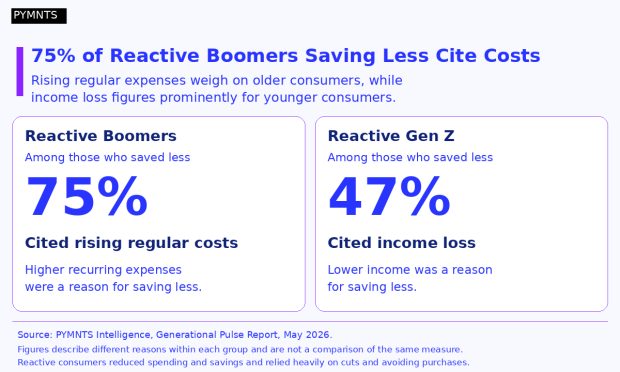
Savings declines have different causes. Among reactive boomers who saved less, 75% cited rising regular costs. Among reactive Gen Z consumers who saved less, 47% cited income loss. The report defines reactive consumers as those whose spending and savings fell and who relied heavily on spending cuts and avoiding purchases. For providers, the two findings point toward different conversations. Reviewing recurring bills may help identify manageable expenses, while an income decline calls for examining how the customer will cover obligations until earnings recover.
Housing pressure extends beyond the monthly payment. Among Gen X consumers reporting housing challenges, 81% of reactive consumers cited utilities, compared with 57% of balanced consumers. Balanced consumers held spending steady or increased it and took limited coping action. The 24-percentage-point difference suggests that a review focused on rent or mortgage payments could overlook an important source of strain. Electricity, gas, water and internet bills deserve attention when providers assess what a household can afford each month.
Debt needs a closer reading. Among millennials facing debt challenges, 75% of reactive consumers flagged credit card payments as the biggest problem, compared with 60% of balanced consumers. For a lender, that finding supports asking which obligations are pressing on the budget before proposing another product. Payment timing, existing balances and available income can help frame that discussion. An installment option alone cannot establish whether the household has enough money to meet its commitments.
The commercial implication is a more specific assessment of customer needs. A falling savings balance can prompt a conversation, but the balance alone does not explain what assistance would be useful. These survey findings describe associations, rather than proving that any particular financial tool improves outcomes. Banks and payment providers can use the patterns to guide further questions, then evaluate whether a proposed service addresses the expense or income problem the customer actually reports.
At PYMNTS Intelligence, we work with businesses to uncover insights that fuel intelligent, data-driven discussions on changing customer expectations, a more connected economy and the strategic shifts necessary to achieve outcomes. With rigorous research methodologies and unwavering commitment to objective quality, we offer trusted data to grow your business. As our partner, you’ll have access to our diverse team of PhDs, researchers, data analysts, number crunchers, subject matter veterans and editorial experts.


 Add as Preferred Source