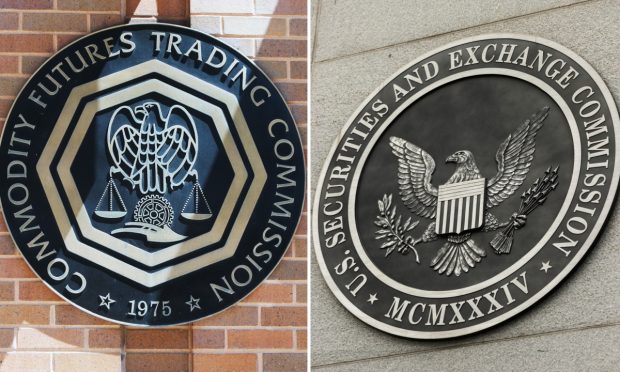
Hill acknowledged that both agencies have moved to establish a regulatory framework for digital assets to try to fill the gap left by Congress’ failure to enact the Clarity Act, Decrypt reported Wednesday (Oct. 7), citing Fox Business. But he warned that their actions cannot substitute for permanent statutory authority.
“In my judgment, these regulatory policies fall short of what we have to do, which is have a legislative solution,” Hill said, per the report.
Hill’s comments underscored the limitations of the regulatory approach that has emerged since the Senate failed to advance the Clarity Act in a 49-50 vote in September. The legislation would have established a comprehensive market structure framework for digital assets, including clearer jurisdictional boundaries between the SEC and CFTC.
Hill credited SEC Chairman Paul Atkins and CFTC Chairman Mike Selig for taking steps to use their regulatory authority and exemptive powers to define digital assets and digital commodities, the report said.
The SEC introduced an “innovation exemption” designed to accommodate tokenized stocks, allowing certain blockchain-based securities activities to proceed under relief from existing regulatory requirements, according to the report. It also proposed changes to rules governing how investment advisers and investment funds can custody cryptocurrencies, addressing a longstanding obstacle to institutional participation in digital asset markets.
Meanwhile, the CFTC submitted cryptocurrency market rulemaking initiatives for White House review and issued an advance notice of proposed rulemaking outlining a framework for bringing cryptocurrency exchanges under federal oversight, per the report.
The CFTC initiative seeks to establish a regulatory pathway for digital asset trading platforms within the agency’s existing authority, rather than waiting for Congress to enact a comprehensive market structure law.
We’d love to be your preferred source for news.
Please add us to your preferred sources list so our news, data and interviews show up in your feed. Thanks!
Together, these measures represent an effort to resolve questions about permissible activities, custody arrangements and trading platform oversight that the Clarity Act was intended to address.
However, Hill said in the report that administrative action has limitations.
Exemptions and regulatory guidance can be challenged in court, revised or withdrawn by subsequent administrations, Hill said, according to the report. Even formal agency rules remain subject to changes in regulatory priorities and legal challenges over whether an agency has exceeded its statutory authority.
Legislation, on the other hand, could establish durable jurisdictional boundaries and regulatory obligations that agencies would be responsible for implementing.
Hill, who helped author the Financial Innovation and Technology for the 21st Century Act, known as FIT21, in the previous Congress and the Clarity Act in the current Congress, has advocated a statutory framework for digital assets.
His position contrasts with the emerging industry view that cryptocurrency companies can rely on sympathetic regulators to achieve many of their objectives without congressional action.
Hill nevertheless expressed hope that Congress could revive the Clarity Act during its post-election lame-duck session, despite its failure to secure sufficient Senate support in September, the report said.
“We need that permanent law change to make sure America is No. 1 in digital assets and blockchain technology,” he said, per the report.
Whether Congress can overcome the disagreements that derailed the legislation before the end of the year remains uncertain. In the meantime, the SEC and CFTC are moving ahead with regulatory initiatives.


 Add as Preferred Source