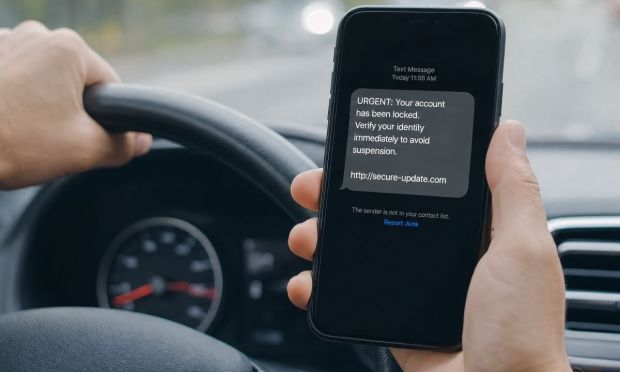
A bank can monitor a login, score a transaction and flag unusual account activity. It can’t see the text message that convinced its customer to send the money, which is giving scammers a lucrative way to switch up how they reach victims.
The PYMNTS Intelligence report “Fraud’s Loyalty Tax: How Scams Cost Banks Their Customers” found in September that first contact by SMS or text rose 35% since September 2025, reaching 12% of victims in July. Email moved in the opposite direction, falling 30% to 13%. Email led text by 10 percentage points less than a year earlier; the difference is now less than 1.5 points.
A scam that begins through a text, social media message or other outside channel can leave scant evidence inside the financial institution until the customer tries to move money.
The transaction itself can be authorized by the account holder. The risk lies in what happened before it. A new recipient, an unusual payment amount or destination, changes in transaction patterns, or other deviations from normal account activity can provide signals even when the institution can’t see the conversation driving the transaction.
The data showed that 43% of victims made or authorized a payment within one hour of first contact, and 63% did so within a day. Within 30 minutes of the first transaction, 35% realized their money was gone.
The growth in text-based contact also isn’t uniform across consumers. Among Generation Z victims, 15% said SMS or text was the first point of contact, 32% above the average across victims. Social media plays an even larger role for the group, as 23% cited it as the starting point, 31% above average.
We’d love to be your preferred source for news.
Please add us to your preferred sources list so our news, data and interviews show up in your feed. Thanks!
For financial institutions serving younr digital customers, fraud detection therefore has to account for scams that can originate across several communications platforms before reaching a bank account or payment service.
Detecting the Payment After the Message
At 13%, email remains slightly ahead of text. The change is in how closely fraud prevention can be tied to a single communications channel.
Banks and FinTechs generally don’t control the channel where the scam begins. Their opportunity to intervene may arrive when a customer adds a recipient, initiates a transfer or otherwise acts on instructions received elsewhere.
The report’s payment-timing data showed how short that opportunity can be for some scams. Fake eCommerce and marketplace scams were among the fastest, with 79% of victims paying within a day and a median payment time of less than an hour. Other scams developed more slowly. Only 16% of romance-scam victims paid within a day, with a median time to payment of at least two weeks.
A fraud control designed to identify a rapid, unusual payment may face a different pattern when a scammer has spent weeks establishing trust before the customer sends money. The contact may happen elsewhere. The payment is where banks and FinTechs can see the result.
As text closes the gap with email, fraud prevention must identify more of that risk from the financial behavior that follows the message rather than from the message itself.
At PYMNTS Intelligence, we work with businesses to uncover insights that fuel intelligent, data-driven discussions on changing customer expectations, a more connected economy and the strategic shifts necessary to achieve outcomes. With rigorous research methodologies and unwavering commitment to objective quality, we offer trusted data to grow your business. As our partner, you’ll have access to our diverse team of PhDs, researchers, data analysts, number crunchers, subject matter veterans and editorial experts.


 Add as Preferred Source