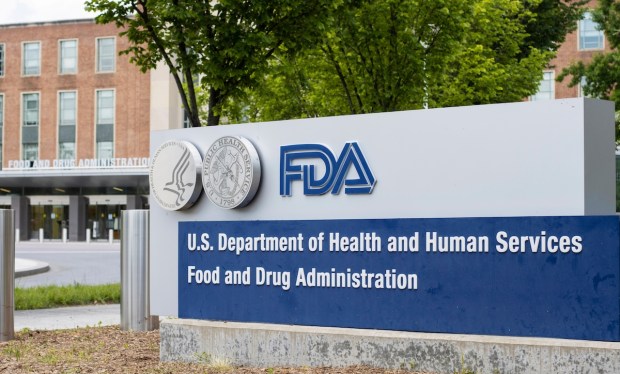
The Food and Drug Administration is keeping a firm regulatory gate between a new radiology algorithm and its ability to generate revenue in the United States.
An FDA final order that took effect Thursday (Sept. 17) requires several categories of artificial intelligence-enabled radiology software to continue receiving agency clearance before entering the market. The order formalizes the agency’s April 1 denial of a petition from healthcare AI company Harrison.ai.
The decision carries implications beyond medical technology. Health systems, investors and lenders evaluating AI companies must track which products and software versions have regulatory clearance. A company may have sophisticated technology and strong clinical interest, but its ability to sell a specific product still depends on FDA approval.
Sydney, Australia-based Harrison.ai had sought a partial exemption from the traditional 510(k) premarket-notification process for four types of radiology software. They included tools that help detect or diagnose suspicious cancer lesions, analyze medical images and alert clinicians to potentially urgent findings.
Under the proposal, the exemption would have applied only when a manufacturer had already received clearance for a related device. Participating companies would also have been required to maintain post-market monitoring, transparency and training programs while continuing to follow existing quality and registration requirements.
The proposal essentially asked FDA to place greater weight on a manufacturer’s record and its ability to monitor software after deployment.
We’d love to be your preferred source for news.
Please add us to your preferred sources list so our news, data and interviews show up in your feed. Thanks!
FDA declined to make that trade. The agency said the petition and public comments did not demonstrate that premarket notification was unnecessary to provide reasonable assurance of safety and effectiveness. Manufacturers must therefore continue submitting 510(k) applications and receiving clearance before marketing the covered products.
The 510(k) process generally requires a manufacturer to show that a device is substantially equivalent to one already legally marketed. For software companies accustomed to frequent product updates, that creates a different development rhythm from ordinary cloud software.
An AI model may improve quickly as developers refine its training, performance or user experience. Yet a clinically meaningful change cannot automatically move from development into hospitals like a routine software update. Companies must determine whether a modification affects the product’s safety, performance or intended use and whether it requires another regulatory submission.
That makes version control a financial concern as well as a compliance task.
Investors and lenders financing healthcare AI firms need to know which version has clearance, which version is under review and how much projected growth depends on products that cannot yet be marketed. Revenue forecasts built around an improved model may arrive ahead of the regulatory authority needed to sell it.
Health systems face a related problem. They need controls that connect the software running in clinical settings to the exact product and capabilities cleared by FDA. A hospital cannot assume that the newest version is automatically authorized for the same uses as its predecessor.
FDA left room for future flexibility. The agency said it remains committed to innovative and less burdensome approaches that can accelerate access to safe medical-device software.
For now, however, post-market monitoring remains a second line of defense. It hasn’t replaced the premarket gate.


 Add as Preferred Source