Payments infrastructure has become an expert at answering questions centered on human behavior. Is this really the cardholder? Is this account authorized? Is the transaction fraudulent?
Artificial intelligence agents introduce another question. Even if the machine is legitimate, was it allowed to make this particular decision?
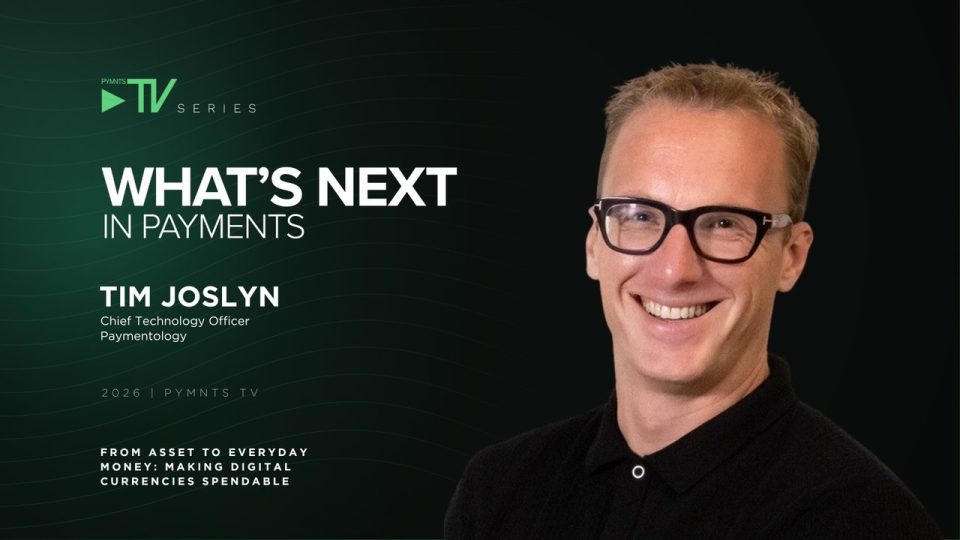
“The technology is moving faster than the liability frameworks,” Paymentology Chief Technology Officer Tim Joslyn told PYMNTS for the October edition of the “What’s Next in Payments” series, “The Last Thing a Human Will Need to Approve.”
“Our problem is not automation,” Joslyn said. “Our problem is interpreting and consuming everything it does for us in a safe way.”
That distinction also changes how enterprises should think about deploying agents. AI autonomy is frequently discussed as a capability, whereby once a model becomes sufficiently accurate, organizations can remove the person supervising it.
However, Joslyn described something closer to an underwriting process.
“For me, autonomy is earned with evidence,” he said. “What you’re not going to do is be caught up with the enthusiasm of, just because something can make a decision, it should make that decision.”
The unlock innovation across agentic payments, it turns out, looks less about building agents capable of doing everything than defining exactly what each agent is allowed to do.
“If something goes wrong and an agentic payment is made that shouldn’t be made, or a decision is made that shouldn’t be made, is it the programmer?” Joslyn said. “Is it the person who instructed the command in the first place? There isn’t this clear liability model.”
The Next Agentic Payments Problems Are Permission and Liability
The last human in the payments loop may not disappear because AI becomes trustworthy. It may disappear because financial institutions finally figure out who takes the loss when AI gets something wrong. One way to see where humans will disappear first is to stop looking at the sophistication of the task and start looking at the consequences of failure.
“We still see the ‘yes’ button sit where the stakes are concentrated,” Joslyn said. “Wherever the maximum mistakes can be made, that’s where the human button sits.”
Fraud models already make many authorization decisions automatically. Chargebacks and disputes increasingly incorporate automated decisioning. These processes can be complicated, but they are also repetitive enough to generate evidence about how automation performs.
Move far enough up the consequence curve, however, and the calculus changes. A mistaken card decline can be overridden. A poorly executed card portfolio migration or incorrectly initiated large-value transfer can create consequences that are harder to unwind.
“The higher the risk gets about when to make that decision, the more likely it is to remain as human for a while longer,” Joslyn said, adding that the dividing line for automation is reversibility, not complexity.
AI Doesn’t Get Authority Just Because It Works
We’d love to be your preferred source for news.
Please add us to your preferred sources list so our news, data and interviews show up in your feed. Thanks!
Enterprises can manage machine authority incrementally, a way that is akin to how financial institutions manage other forms of risk exposure.
One path is “shadow mode,” similar to a junior employee shadowing a more senior leader, where an agent receives the same information as a human and records the decision it would have made without actually executing it. Companies can then compare machine decisions against real-world outcomes before gradually increasing the AI agent’s authority.
An agent, for example, could receive permission to perform a particular action, below a particular dollar threshold, for particular counterparties, under particular conditions. Successful performance could expand that mandate.
“If you’re confident it’s making the same decisions as you are, then you’re going to be happy to hand that over,” Joslyn said. “But I think it has to be evidence-based to make that final leap.”
That becomes harder once agents start spending money.
Paymentology is already seeing tightly scoped versions of that future. Joslyn pointed to a customer deploying an agentic-style banking experience in which users can conversationally instruct the system to send someone $100.
The command is simple because its parameters are relatively clear.
A request for an agent to, “Go and buy me a red jumper,” however, as Joslyn said, is a different instruction. Price, merchant, size, style and acceptable substitutions are all unstated variables. An agent must either ask questions or infer what its user meant.
That ambiguity becomes economically important the moment money changes hands.
Joslyn pointed to emerging models capturing the user’s intent, the parameters given to the agent and the limitations placed on its authority. That information effectively creates an audit trail for machine decision-making. Instead of asking only whether a transaction was authenticated, financial institutions may need to determine whether an authenticated agent behaved within its authenticated mandate.
That infrastructure is becoming urgent. Joslyn estimated the liability question will need to be actively worked through over the next six to 12 months because agentic technology is moving quickly.
Watch the full PYMNTS interview with Paymentology Chief Technology Officer Tim Joslyn to hear more about:
- Why AI can make the payment before anyone knows who owns the mistake. Automation is advancing faster than liability frameworks, creating an urgent question around whether responsibility sits with the user, programmer, agent deployer or another party when an autonomous transaction goes wrong, Joslyn said.
- Why the last human approval will survive where mistakes cost the most. Repeatable decisions, such as fraud and chargebacks, are increasingly automated, but humans remain at points where errors are expensive or difficult to reverse because “the button sits where the stakes are concentrated,” Joslyn said.
- Why AI autonomy must be earned, not switched on. Companies can use “shadow mode” to compare an agent’s decisions with human ones before expanding its authority, making evidence, tightly defined permissions and auditable intent prerequisites for autonomous payments, Joslyn said.
For all PYMNTS AI and B2B coverage, subscribe to the daily AI and B2B newsletters.

 Add as Preferred Source