Selling in another country can force a merchant to find out how much growth its payments infrastructure can actually support.
New markets bring local payment preferences, new providers and different transaction economics, while every connection adds another system that has to be integrated, reconciled and maintained. What looked manageable when a merchant operated in one or two markets can become costly as the footprint expands.
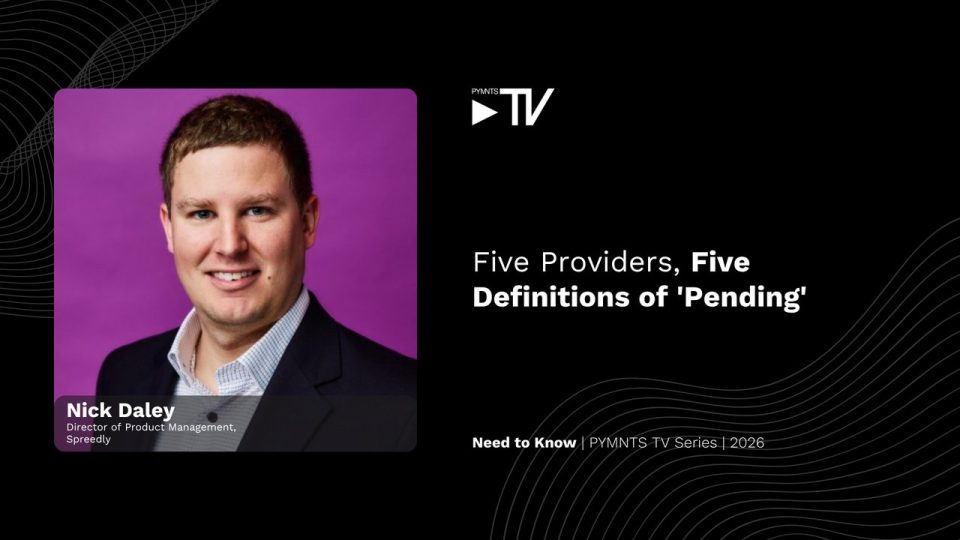
“It’s rarely the initial connection that becomes the problem for merchants,” Nick Daley, director of product management at Spreedly, told PYMNTS. “It’s generally the operational and data layers that become the obstacles.”
A provider might send fractional values rather than whole numbers in an installment field, for example. A pending transaction may be treated differently by two providers. Neither problem necessarily prevents the integration from working, but each can complicate the systems responsible for reconciliation and other downstream operations.
Payment preferences create another decision before the merchant gets very far. Consumers in a new market may expect methods that aren’t prominent in the merchant’s home country, making local payment support part of the expansion plan.
Adding every available option carries its own cost.
“More methods don’t inherently mean ‘better,’ because each one that you add to your payment stack will carry overhead to the stack,” Daley said. “Some are more relevant than others in certain markets.”
Daley said two to four payment methods can account for the overwhelming majority of transaction volume in some markets. Other options may attract relatively little use while still requiring engineering and support resources.
Merchants therefore have to determine where their own customers’ payment volume is likely to concentrate rather than treat the number of available methods as the measure of a localized checkout.
Payment economics also change across borders. Cross-border interchange and card network economics can differ from domestic processing, while Daley said local acquiring is generally cheaper for merchants. Alternative payment methods can introduce different costs, settlement timing and risk profiles.
A real-time bank transfer, for example, brings an economic structure different from a card transaction. Routing decisions made for a merchant’s domestic operation consequently can’t simply be duplicated in another country.
The Cost Doesn’t End With Integration
Building a new provider connection creates an immediate engineering expense. Maintaining it creates a continuing one.
We’d love to be your preferred source for news.
Please add us to your preferred sources list so our news, data and interviews show up in your feed. Thanks!
“A direct integration with every new provider is its own project, with its own quirks to learn and its own overhead to maintain indefinitely,” Daley said.
The workload includes normalization and reconciliation as well as the original technical connection. Two markets with two local providers may remain manageable through direct integrations, Daley said. Five or six providers can leave a merchant dealing with multiple status codes, settlement formats and retry behaviors.
“The constraint isn’t a single big wall you hit when you integrate a new provider,” he said. “That cost compounds over time.”
The cumulative expense helps explain the role of payments orchestration in geographic expansion. Instead of requiring the merchant to maintain a separate technical structure around every provider, an orchestration layer can normalize provider-specific differences behind a common connection.
Daley described the objective as “collapsing that integration effort into a single surface and a single plane” for the merchant to maintain. Provider-specific complexity can then be handled within the orchestration layer rather than repeatedly inside the merchant’s own payments stack.
Orchestration doesn’t remove the work of entering another market.
“Orchestration can’t solve every problem,” Daley said. “Orchestration solves the technical and operational integration layers.”
Regulatory and compliance requirements remain market specific, including data residency, licensing and tax treatment. Merchants also remain responsible for their commercial relationships with local acquirers. Connectivity to an acquirer doesn’t mean a merchant will be underwritten or approved by it.
Checkout localization brings another set of responsibilities. Currency display, language and the payment experience have to be adapted to the market. Fraud models developed around purchasing behavior at home may also need recalibration when merchants encounter different transaction patterns abroad.
The next expansion decision therefore isn’t simply which country to enter. Merchants have to decide which payment methods warrant ongoing support, how many provider relationships their infrastructure can absorb and how much engineering capacity should remain tied to maintaining them.
Watch the full interview with Nick Daley to learn more about:
- What can go wrong when two providers use similar transaction data differently.
- How cross-border interchange, local acquiring and settlement structures affect payment routing.
- Why fraud models built around one market may need to be recalibrated when merchants enter another.

 Add as Preferred Source