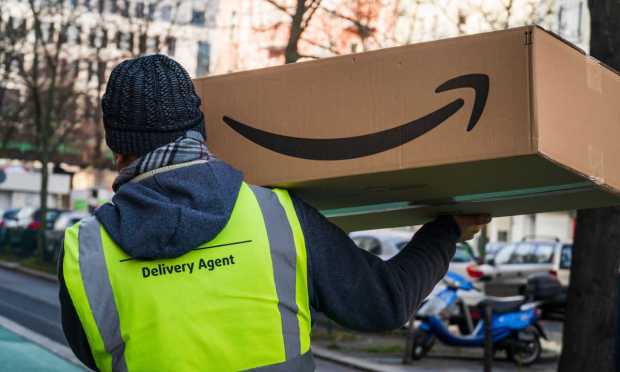
Amazon knows this, and the digital retail giant is already acting on it strategically. Project Mercury, Amazon’s plan, reported on Wednesday (Sept. 16), to expand its same-day delivery hubs from 85 today to more than 1,000 by 2031 could increase Amazon’s same-day footprint more than tenfold and place fast-delivery capacity within 10 miles of 80% of U.S. Prime members.
The headline is speed. The more consequential story is proximity. Amazon is effectively trying to manufacture through logistics infrastructure something Walmart already possesses through real estate: inventory sitting close enough to millions of households that everyday purchases can arrive within hours rather than days.
Read more: Amazon and Walmart Test Whether Drones Can Make Rural Delivery Pay
The $6.8 Billion Geography Problem Facing Amazon Fulfilment
Walmart operates roughly 5,000 U.S. stores, placing a location within 10 miles of about 90% of the U.S. population. Those stores are no longer simply retail outlets. They function as distributed fulfillment infrastructure, handling the last mile for 80% of Walmart’s eCommerce orders and all of its fast deliveries, according to a Bank of America report shared with PYMNTS.
The result is an increasingly formidable delivery network: Walmart now delivers 70% of its eCommerce orders the same day, including more than 30% within three hours. Amazon cannot replicate 5,000 Walmart stores. Project Mercury suggests it may not need to.
The proposed hubs would stock roughly 90,000 high-velocity products, including fresh food, paper towels and cough medicine. That assortment shows Mercury is not designed to recreate Amazon.com at the neighborhood level. It is designed to identify the relatively narrow universe of products consumers frequently want immediately and position those goods much closer to demand.
In other words, Amazon is beginning to separate two retail propositions that its original fulfillment model bundled together: infinite selection and immediate availability. National fulfillment infrastructure can provide the first. Local inventory increasingly determines the second.
That distinction becomes especially important as Amazon pushes further into groceries, household essentials and other high-frequency categories. Consumers may tolerate waiting for a specialized electronics accessory or obscure book. Milk, medicine and detergent operate on a different clock.
We’d love to be your preferred source for news.
Please add us to your preferred sources list so our news, data and interviews show up in your feed. Thanks!
Read also: Amazon Takes Five Categories as Walmart Tightens Its Grocery Grip
Walmart Is Digitizing the Advantage It Already Owns
The complication for Amazon is that Walmart’s network is not standing still.
Walmart has spent years converting stores from a potential eCommerce liability into fulfillment assets. Half of its eCommerce fulfillment center volume is now automated, while 65% of stores receive freight from automated distribution centers.
Amazon historically held the advantage in fulfillment technology and digital commerce while Walmart held the advantage in physical proximity. Today, each company is importing the other’s strengths. Walmart is layering automation and software onto thousands of locations already near consumers. Amazon is layering local infrastructure onto a system already optimized around automation and eCommerce.
The destination looks to be growing increasingly similar: dense networks of inventory, software and automated fulfillment capable of predicting demand and getting products to consumers within hours. After all, a household that turns to a specific retailer for occasional purchases is valuable. A household that reflexively opens that retailer’s platform whenever it needs groceries, medicine or household staples is considerably more valuable.
The next phase of the Amazon-Walmart competition may not be about which retailer has the biggest website, the broadest assortment or even the fastest warehouse. It is about who owns the inventory closest to the customer when the customer decides they need something now.
Walmart already has thousands of answers to that question sitting across the country. Amazon is preparing to spend $6.8 billion to build its own.
For all PYMNTS digital transformation and B2B coverage, subscribe to the daily Digital Transformation and B2B Newsletters.


 Add as Preferred Source