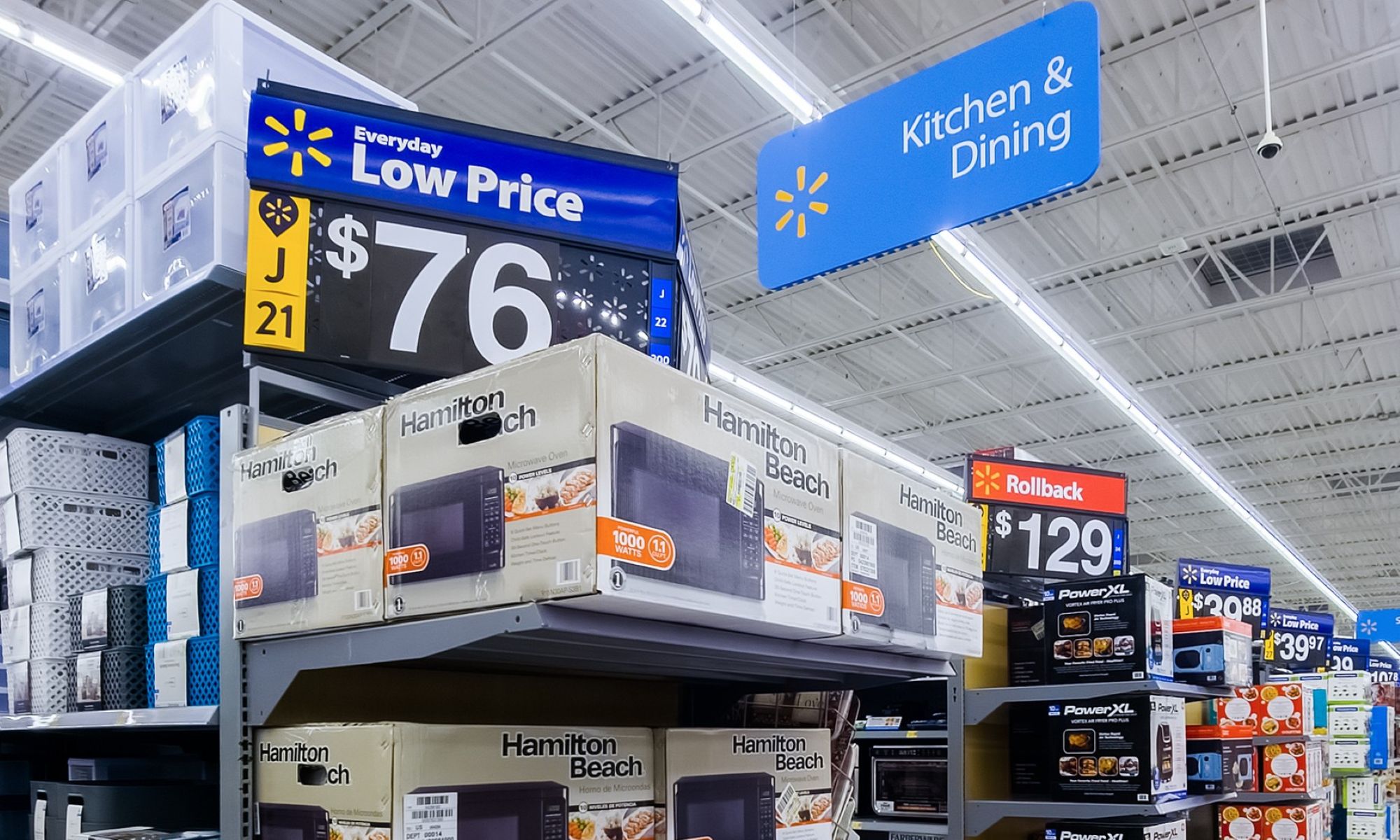
Walmart has spent years making low prices its competitive advantage. Now, it faces the more complicated test of proving that the customers attracted by those prices are worth more to the business.
When the retail giant reports fiscal third-quarter earnings this Thursday (Nov. 19), investors will be looking beyond comparable sales and holiday forecasts for evidence that Walmart’s expanding digital ecosystem can convert customer traffic into higher-margin revenue. Walmart’s opportunity is to make money from more than the products customers put in their carts.
Its marketplace, advertising network, membership program and fulfillment infrastructure create additional ways to monetize each shopping relationship. As a result, Walmart’s next stage of growth may depend less on how cheaply it can sell merchandise than on how profitably it can serve the customers those prices attract.
Thursday’s results will help establish whether that model is becoming more profitable as the holiday shopping season accelerates.
Read more: Amazon Takes Five Categories as Walmart Tightens Its Grocery Grip
The Price-Cut Payoff
Wall Street expects Walmart to report adjusted earnings of about 64 cents per share, up from 62 cents a year earlier. The more consequential question is what is driving those sales.
Walmart’s second-quarter U.S. comparable sales increased 2.6%, supported by a 1.5% rise in transactions. Management has also committed to using tariff refunds to support lower prices and improve the shopping experience. Those investments create a measurable trade-off. Lower prices can attract shoppers, increase purchasing frequency and capture market share, but the resulting volume must eventually justify the margin sacrificed to generate it.
The composition of growth is therefore as important as its pace. Food and household essentials provide recurring demand, while general merchandise offers opportunities to expand basket size and improve product mix. If Walmart can convert grocery visits into purchases across higher-margin categories, its pricing strategy could produce returns beyond additional foot traffic.
That opportunity comes as consumers remain deliberate about discretionary spending, according to data shared in “The Three-Speed Consumer Economy: How Financial Capacity Is Rewriting Spending Behavior,“ a June 2026 PYMNTS Consumer Expectations Index (PCEI) report.
For Walmart, the holiday challenge is not simply convincing consumers to spend. It is capturing a greater share of spending they already intend to make.
AI and Delivery Face a Commercial Reality Check
Walmart’s latest technology investments add another dimension to the holiday earnings story. In October, the company expanded its Sparky AI shopping assistant, including functionality that converts photographed shopping lists into digital carts. In November, Walmart announced plans to add 300 Zipline drone delivery sites under a multiyear agreement.
Both initiatives address friction in the shopping experience, but neither should be confused with a demonstrated financial return. AI-assisted shopping could improve conversion rates, increase basket sizes and reduce the effort required to complete purchases. Drone delivery could expand convenience and potentially improve fulfillment economics in suitable markets.
Whether those benefits materialize depends on adoption, incremental purchases and cost per order. The distinction is especially important as retailers compete to make shopping more automated. Removing steps between product discovery and checkout can create value, but only if it produces additional profitable transactions rather than simply shifting existing purchases into more expensive channels.
For Walmart, Thursday’s most useful technology disclosures would connect customer behavior to measurable commercial outcomes.
The Holiday Forecast Has a Timing Complication
Management’s full-year outlook will provide another indication of confidence heading into the critical holiday quarter. Walmart previously guided to constant-currency net sales growth of 4% to 5% and adjusted earnings of $2.80 to $2.87 per share.
Meanwhile, competition for seasonal purchases is intensifying. Amazon has expanded its Black Friday and Cyber Monday promotional period into a 12-day event, extending the period during which retailers must defend both prices and customer attention.
Walmart enters that contest with substantial grocery scale and an expanding digital platform. The question is how effectively those advantages reinforce each other.
The company does not need to abandon its low-price proposition to improve profitability. It needs to demonstrate that lower prices attract customers whose shopping activity generates additional revenue across advertising, marketplace services, memberships and fulfillment.
For all PYMNTS digital transformation, AI and B2B coverage, subscribe to the daily digital transformation, AI and B2B newsletters.