Real-time payments (RTP) are a long time coming and still in very early days, but the wrangling of regulators, banks and other stakeholders is fast approaching a real-time singularity.
In the study Real-Time Payments: The Fast Track To The Future Of Corporate Payments, a PYMNTS and The Clearing House collaboration, we surveyed 100 executives at companies generating $50 million to $1 billion annually to discover what benefits that early adopters are realizing through RTP use — and what the remaining hurdles for instant payments are.
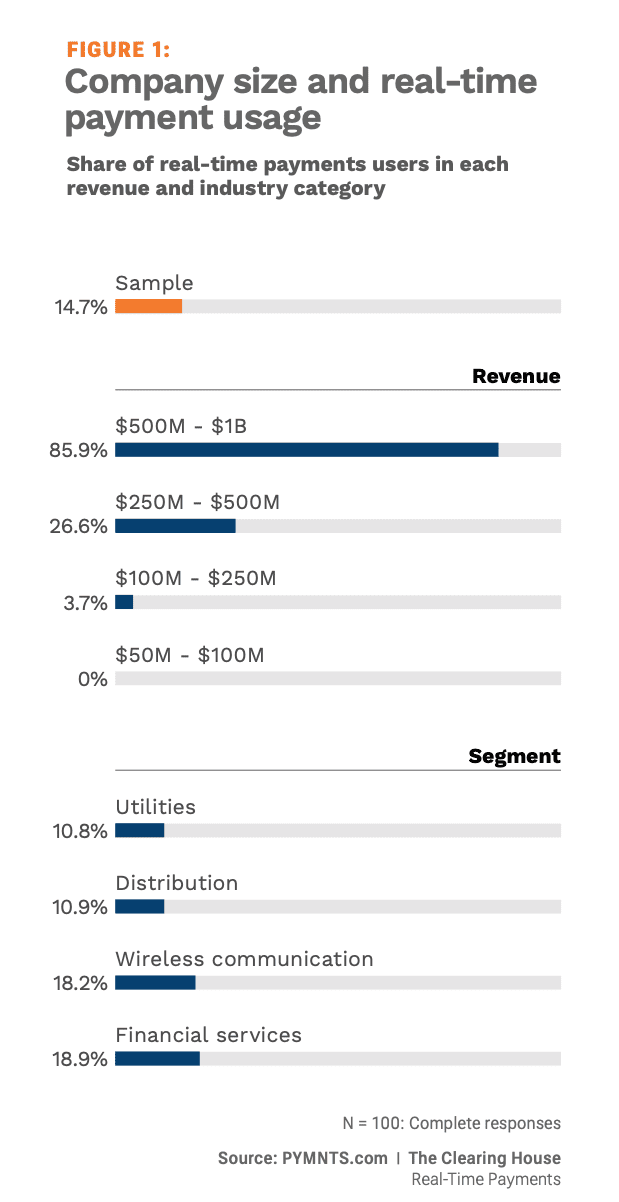
- 86% of businesses generating $500 million to $1 billion use real-time payments
Representing the majority of companies saying they are now sending and receiving payments in real time, our research found that nearly 9 in 10 large businesses in the lower end of enterprise show the greatest uptake.
For companies in the $250 million to $500 million revenue range, usage drops to 27%, and as the study states, “companies that use real-time payments are more evenly distributed when sorted by industry and not size,” with 19% of financial firms, 18% of wireless companies and roughly 11% of utilities and distribution companies now using of real-time payments.
We’d love to be your preferred source for news.
Please add us to your preferred sources list so our news, data and interviews show up in your feed. Thanks!
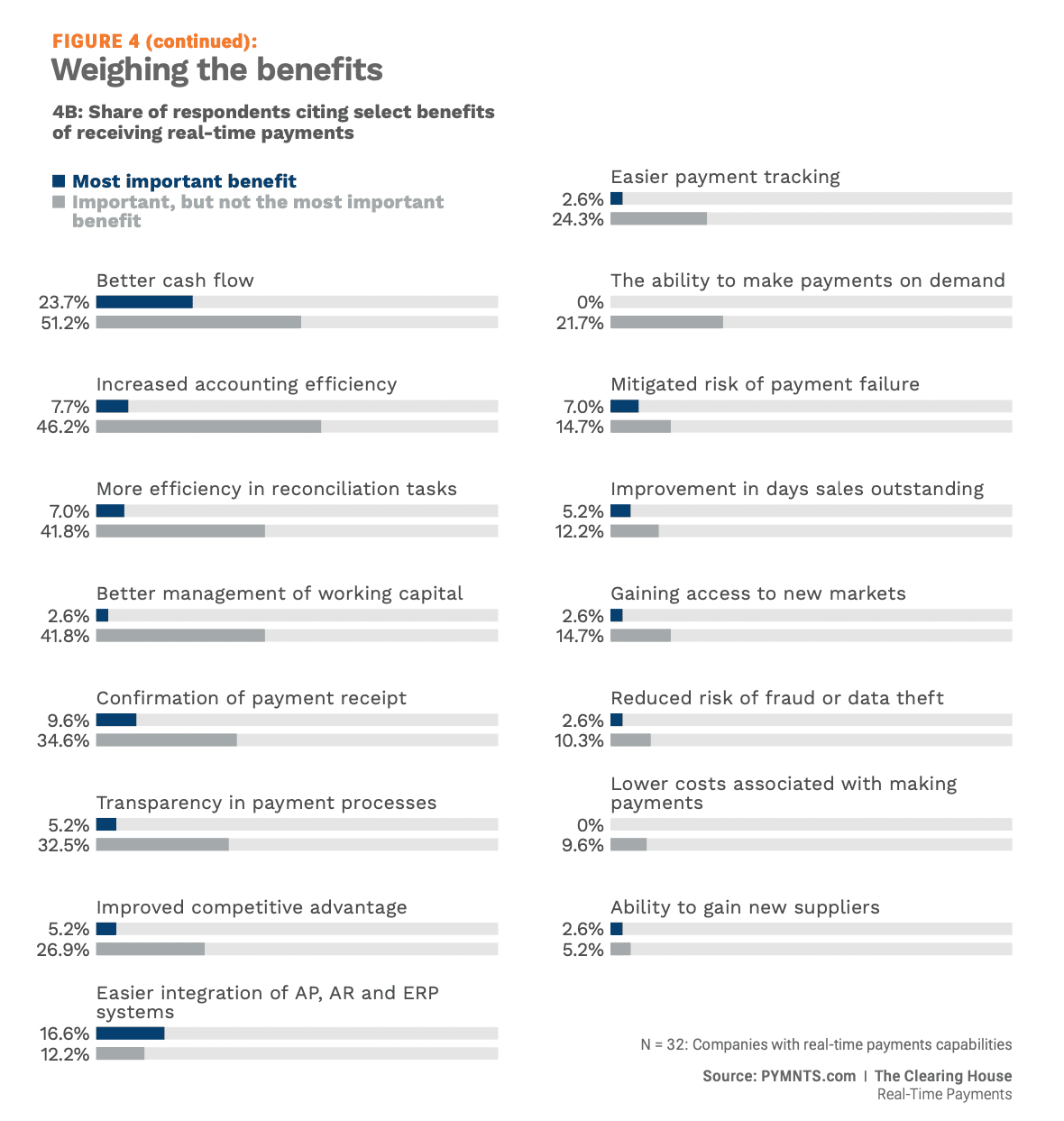
- 53% of companies cite better cash flow management as benefit of real-time payments
No matter which way money is moving, RTP proves itself beneficial to cash flow.
According to the study findings, 53% of respondents said cash flow management improves when transmitting real-time payments — the largest share for any of the RTP benefits asked about, while fully “75% of these companies cite improved cash flow management as a benefit — also the highest score for any of the benefits of receiving payments in real time.”
Advertisement: Scroll to Continue
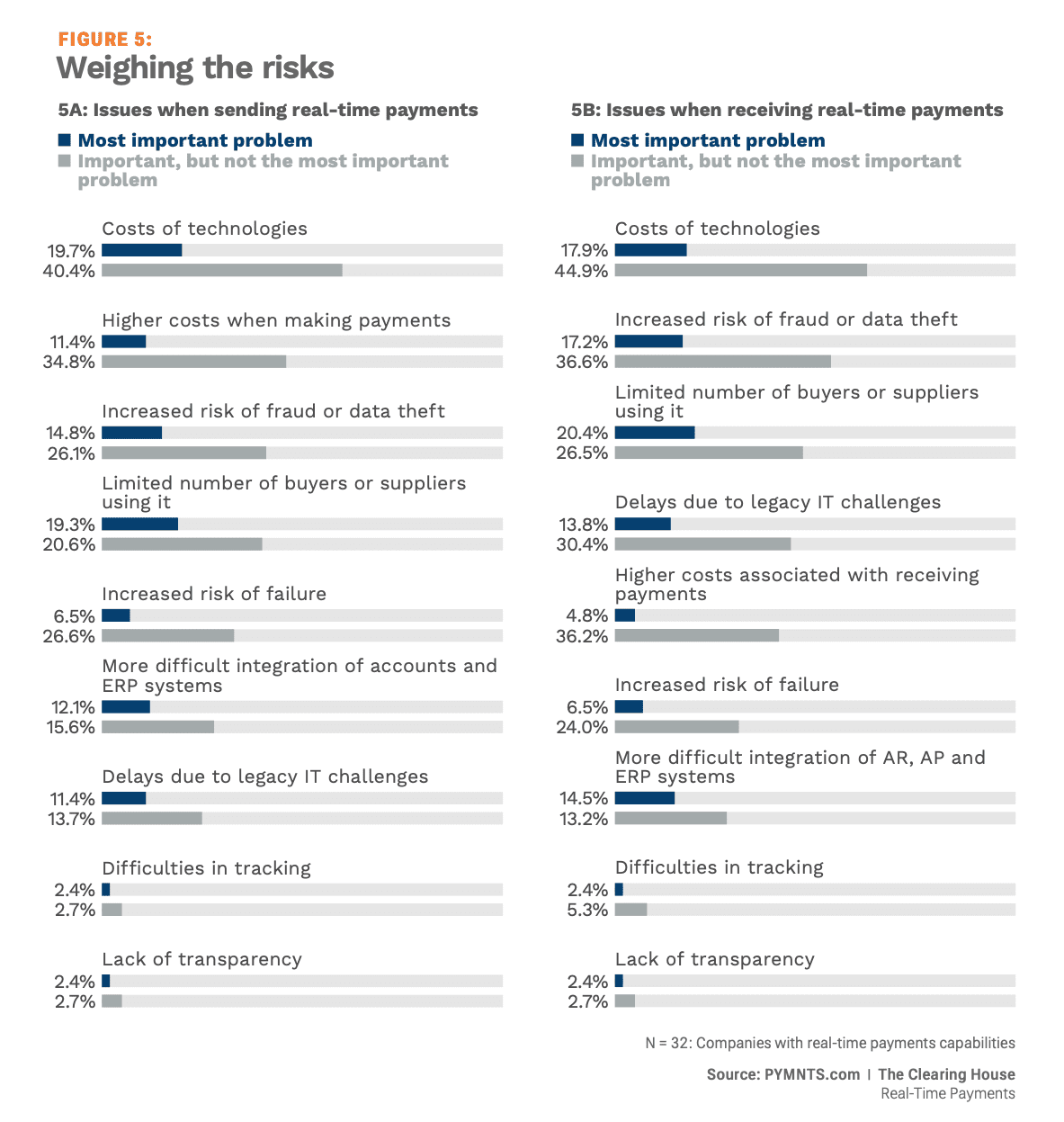
- 20% say the high cost of technology is the biggest hinderance to real-time payments
Sending and receiving real-time payments requires some technical work, and 20% of companies surveyed said high costs associated with RTP tech upgrades are potentially holding them back.
However, 54% “expect to have lower costs once they introduce new features” made possible by RTP transfers, meaning these upgrades may very well pay for themselves in compressed time.
Get the study: Real-Time Payments: The Fast Track To The Future Of Corporate Payments


 Add as Preferred Source